Imasuen Urges African Coastal States to Unlock Blue Economy Potential, Commends Bayelsa’s Development Model
The Edo South senator calls for greater investment in marine transportation, fisheries, aquaculture and coastal tourism, while pledging legislative support for sustainable ocean-based economic development.
Senator Neda Imasuen has called on governments of littoral states across Africa to prioritise the development of their marine resources, describing the blue economy as a significant opportunity for economic diversification, employment generation, food security and sustainable development.
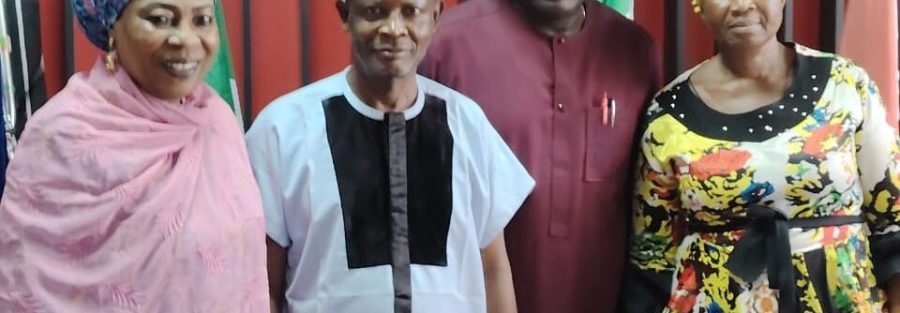
Imasuen, who represents Edo South Senatorial District and chairs the Senate Committee on Ethics, Privileges and Public Petitions, made the appeal during a meeting with a delegation of the Africa Blue Economy Roundtable (ABER), led by its Founder and Convener, Dr Piriye Kiyaramo, at the National Assembly in Abuja.
The senator stressed that African coastal countries must begin to look beyond conventional sources of revenue, particularly oil and gas, and develop policies that enable their populations to benefit from the enormous economic opportunities offered by oceans, rivers, waterways and coastal ecosystems.
He identified sustainable fisheries, aquaculture, marine transportation, coastal tourism and mangrove conservation as priority sectors requiring deliberate government investment.
According to him, Nigeria’s approximately 853-kilometre coastline and extensive riverine resources provide substantial opportunities for building a more diversified and resilient economy.
Bayelsa’s Marine and Blue Economy Ministry as a Model for Other States
A major highlight of Imasuen’s remarks was his commendation of Bayelsa State Governor, Senator Douye Diri, for establishing a dedicated Ministry of Marine and Blue Economy.
He described the initiative as an important institutional step towards giving the marine sector greater policy attention and coordinating investments in coastal economic development.
Imasuen urged other Nigerian littoral states and African coastal governments to consider similar institutional arrangements to accelerate the development of their marine resources.
He maintained that dedicated ministries and specialised government structures could help coordinate fisheries development, maritime infrastructure, coastal tourism, environmental protection and other blue economy activities.
The senator also drew attention to the tourism potential of the Niger Delta, noting that its beaches, waterways and coastal landscapes could support luxury beachfront hotels, recreational facilities and other marine tourism investments.
He argued that proper planning, infrastructure development and private-sector participation could position the region as an attractive destination for domestic and international tourism.
Senate Promises Legislative Support for Blue Economy Development
Imasuen pledged to champion the blue economy agenda within the National Assembly and facilitate engagement between ABER and relevant Senate committees.
The proposed engagement would involve committees responsible for Marine Transport, Local Content, Judiciary, Human Rights and Legal Matters, the Niger Delta Development Commission (NDDC), Science and Technology, and Environment.
He also accepted to serve as a Patron of the Africa Blue Economy Roundtable, signalling his willingness to support the organisation’s advocacy for sustainable and inclusive marine development.
The senator said legislative intervention would be important in establishing an enabling environment for investment, strengthening maritime governance and protecting the economic interests of coastal communities.
He specifically highlighted the need for policies that guarantee artisanal fishers access to traditional fishing grounds while ensuring that marine resources are managed sustainably.
Protecting Artisanal Fishers and Strengthening Coastal Livelihoods
Beyond expanding marine industries, Imasuen emphasised the importance of protecting small-scale fishing communities from unfair competition and economic exclusion.
He called for stronger enforcement of the five-nautical-mile Artisanal Exclusive Zone, a measure intended to safeguard traditional fishing areas and protect the livelihoods of local fishers.
He also advocated improved access to cold-chain infrastructure for women involved in fish processing and distribution.
According to him, providing women processors with appropriate storage and preservation facilities would help reduce post-harvest losses, improve product quality and strengthen their participation in the fisheries value chain.
The senator maintained that the benefits of blue economy development must extend to ordinary coastal residents, particularly women, young people and fishing households whose livelihoods depend directly on marine resources.
He described the blue economy as an important pathway to employment creation, improved food security and climate resilience.
ABER Calls Attention to Illegal Fishing and Maritime Injustice
Earlier, Dr Piriye Kiyaramo introduced the Africa Blue Economy Roundtable as a flagship initiative of the BRACED Tourism Promotion and Development Initiative.
He explained that ABER promotes a Pan-African vision of a Connected, Competitive and Community-Owned Blue Economy, with a presence across the five geographical regions of the African Union and the African diaspora.
The organisation maintains offices in New Jersey and California in the United States, alongside a liaison bureau in Abuja.
Kiyaramo used the engagement to highlight what he described as the growing blue justice gap in the Gulf of Guinea, particularly the challenges confronting artisanal fishing communities.
He disclosed that more than 70 per cent of artisanal fishers reportedly venture into the sea without adequate safety equipment, exposing them to significant occupational and maritime risks.
He also cited estimates that West Africa loses approximately $2.3 billion annually to illegal, unreported and unregulated (IUU) fishing.
According to Kiyaramo, more than 90 per cent of fisherfolk reportedly lack access to legal assistance or effective channels for reporting violations affecting their rights and livelihoods.
He called for stronger maritime governance, improved enforcement mechanisms and greater protection for vulnerable coastal communities.
Kiyaramo argued that Africa’s blue economy cannot achieve its full potential if the people who depend directly on marine resources continue to face unsafe working conditions, illegal fishing competition and limited access to justice.
Women Must Be Part of Africa’s Marine Economic Transformation
The importance of women’s participation in blue economy development was also reflected in contributions from ABER representatives.
The organisation’s Director of Policy and Advocacy, Women’s Forum, Dr Ezeadili Appolonia Obiageri, and Director of Communication and Public Affairs, Hajiya Medina Dauda Nadabo, commended Imasuen for receiving the delegation and expressing willingness to support the advancement of the sector.
Their participation highlighted the need to strengthen women’s representation in marine policy discussions and expand their access to economic opportunities across fisheries, aquaculture, processing, preservation and coastal enterprise development.
For many coastal communities, women play critical roles in the handling, processing and marketing of fish products. Improved access to finance, modern equipment, cold storage and business infrastructure could strengthen their productivity and economic independence.
A New Direction for Nigeria’s Coastal States
The engagement between Senator Imasuen and the Africa Blue Economy Roundtable brings renewed attention to the economic opportunities available to Nigeria’s coastal states and the wider African maritime sector.
Nigeria’s marine and inland water resources offer opportunities across several industries, including fisheries, aquaculture, shipping, port operations, tourism, marine biotechnology and environmental conservation.
However, realising these opportunities will require coordinated government policies, legislative support, infrastructure investment, private-sector participation and effective environmental management.
Bayelsa’s establishment of a dedicated Ministry of Marine and Blue Economy provides an institutional example that Imasuen believes other coastal states should consider as they develop their respective marine sectors.
The proposed engagement between ABER and relevant Senate committees could also provide a platform for translating the organisation’s advocacy into practical legislative and policy discussions.
Ultimately, the development of Africa’s blue economy will depend on the ability of governments to balance economic growth with marine conservation, maritime security and the protection of coastal livelihoods.
For Nigeria and other littoral states, the challenge is to transform their marine resources into sustainable sources of prosperity while ensuring that coastal communities remain active participants and beneficiaries of the process.
Africa’s oceans, rivers and coastlines represent more than geographical boundaries. They are economic assets whose sustainable development could help shape the continent’s next phase of industrialisation, job creation and inclusive growth.