Mthembu Unveils REMAP Africa Doctrine to End Raw Mineral Exports and Drive Local Refining
The proposed continental framework seeks to strengthen Africa’s control over its mineral resources through local beneficiation, technological innovation, regional industrial cooperation and greater economic participation for women and young people.
Africa must move beyond exporting unprocessed mineral resources and importing expensive finished products if the continent is to achieve meaningful economic transformation, HRH Nosipho Mthembu has declared.
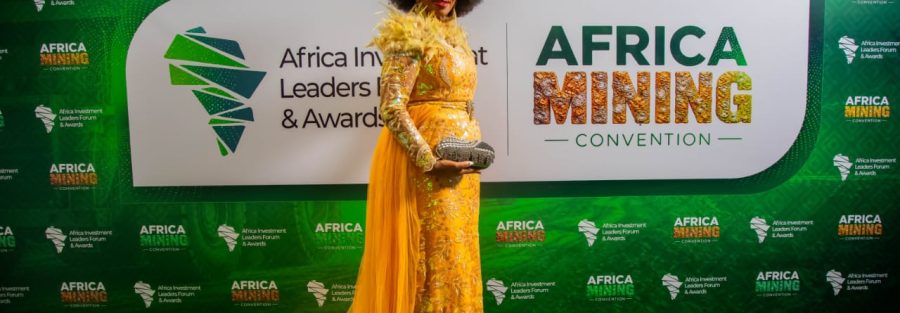
Mthembu made the call while unveiling a new continental development framework, known as REMAP AFRICA – Remapping Africa for Africa, at the Africa Mining Convention 2026 in Victoria Falls, Zimbabwe.
The initiative is designed to reposition Africa’s mining industry by prioritising mineral sovereignty, domestic refining, industrial development and stronger regional cooperation.
Speaking at the convention, Mthembu, who serves as Minister of Mining and Blue Economy in the Alkebulan Hieratic Government and Director of Blue Sovereignty and Traditional Ocean Governance in the Blue Council Africa of the Africa Blue Economy Roundtable (ABER), said Africa could no longer afford an economic model that allows other regions to capture most of the value generated from its natural resources.
Addressing government representatives, industry leaders, investors and delegates from across the continent, she emphasised that mining should be viewed not simply as an extractive activity but as a strategic instrument for employment generation, industrialisation and long-term prosperity.
“Mining is not just about gold and platinum; it is about people, partnership and prosperity for Africa,” she said.
Africa’s Mineral Wealth and the Challenge of Value Addition
Mthembu argued that Africa’s enormous mineral endowment has not translated into commensurate economic benefits because much of the continent’s mineral wealth continues to leave its shores in raw form.
She cited estimates indicating that Africa holds approximately 30 per cent of the world’s mineral reserves, including substantial shares of global cobalt, platinum, manganese and bauxite resources, alongside significant lithium deposits.
Despite this strategic advantage, she observed that Africa accounts for less than five per cent of global refined mineral production.
According to figures presented in her address, the continent exports approximately $90 billion worth of raw minerals annually while importing about $270 billion in finished products manufactured from mineral resources originating from Africa.
She described this imbalance as a structural economic challenge that deprives African countries of industrial opportunities, skilled employment, technology transfer and substantial downstream revenues.
For Mthembu, the solution lies in fundamentally changing the way African countries manage, process and commercialise their natural resources.
She maintained that mineral-producing countries must increasingly invest in local refining, manufacturing and technology-driven production rather than remain dependent on exporting raw commodities.
Understanding the REMAP AFRICA Doctrine
At the heart of Mthembu’s proposal is the REMAP AFRICA doctrine, which she presented as a strategic framework for transforming Africa’s mining and blue economy sectors.
The framework is built around five interconnected priorities:
R – Reclaim Mineral Sovereignty
The first pillar calls for African countries to exercise greater control over their mineral resources and ensure that mining agreements deliver substantial economic benefits to host nations and communities.
Mthembu proposed a new Alkebulan Mining Code that would provide for a minimum 40 per cent state ownership in mining ventures and require at least 30 per cent of mineral processing and beneficiation to take place within producing countries.
The proposal also challenges existing royalty arrangements that, in her view, fail to provide adequate returns to resource-owning nations.
E – Embrace Technology
The second pillar places technological innovation at the centre of mining transformation.
It advocates the deployment of artificial intelligence, blockchain technology, drones and satellite systems to improve mineral exploration, resource mapping, operational efficiency and transparency across the mining value chain.
The objective is to strengthen Africa’s technological capacity while reducing dependence on external systems for critical geological and mineral information.
M – Merge Mining and the Blue Economy
The third pillar proposes integrating mining activities with maritime infrastructure, shipping, logistics and the wider blue economy.
Under this approach, mineral-producing regions would be connected more effectively to strategic ports and industrial centres, creating an integrated value chain linking extraction, processing, transportation and international markets.
Mthembu cited the potential connections between mining operations in Kolwezi and major regional ports, including Durban, Lobito and Beira.
A – African Collaboration
The fourth pillar calls for stronger cooperation among African countries through shared markets, industrial partnerships and coordinated infrastructure development.
Among the proposed priorities are an Africa-wide mineral market, an African shipping line and a continental battery manufacturing initiative.
The framework also encourages African governments to harmonise mining policies and strengthen their collective negotiating power in international mineral markets.
P – People First
The final pillar places women and young people at the centre of Africa’s mining transformation.
Mthembu argued that the benefits of mineral development must extend beyond governments and large corporations to include mining communities, women entrepreneurs, young professionals and local businesses.
She called for greater participation and ownership opportunities for historically underrepresented groups across the mining and blue economy sectors.
Technology as a Catalyst for Mining Transformation
Mthembu identified technological innovation as one of the most important drivers of the proposed transformation.
A major component of the initiative is HAYAH GEO-SAT, an African-owned mineral-mapping satellite constellation expected to be deployed by 2027.
The proposed system is intended to give African communities and institutions greater access to reliable geological information and strengthen local control over mineral resource data.
She also highlighted blockchain technology as a potential solution for improving accountability in mineral transactions.
By introducing traceability systems covering the journey of minerals from extraction sites to export destinations, the initiative seeks to address corruption, mineral theft and illicit financial flows.
Artificial intelligence and renewable energy also feature prominently in the framework.
Mthembu proposed the use of AI-powered solar energy systems to reduce mining operational costs and support lower-carbon mineral production, particularly in strategic sectors such as lithium and platinum.
Another priority is the development of advanced refining and processing capabilities, including plans for the establishment of the first Africa Battery Precursor Plant in the Southern African Development Community (SADC) region, within the Zimbabwe-South Africa-Democratic Republic of Congo lithium triangle.
Such facilities would help African countries participate more directly in the growing global battery and clean-energy supply chains.
Three Strategic Collaborations to Accelerate Implementation
To translate the REMAP AFRICA doctrine into practical economic opportunities, Mthembu proposed three major continental and regional collaborations.
1. Africa Mineral Exchange
The proposed Africa Mineral Exchange (AME), with a suggested headquarters in Victoria Falls, Zimbabwe, would provide a platform through which African countries could exercise greater influence over the pricing and commercialisation of their mineral resources.
The initiative is intended to strengthen transparency, improve market participation and reduce the continent’s dependence on external commodity pricing structures.
2. SADC Lithium-to-Battery Corridor
The second proposal involves establishing an integrated regional lithium-to-battery manufacturing corridor connecting Zimbabwe, South Africa and Mozambique.
The proposed value chain would link mining operations in Bikita, refining activities in Gwanda, battery production in Durban and export logistics through the port of Maputo.
The objective is to ensure that more stages of mineral processing and manufacturing take place within Africa, creating jobs, encouraging investment and retaining greater economic value within the region.
3. Women in Mining and Blue Economy Alliance
The third collaboration focuses on expanding women’s participation and ownership across the mining and blue economy sectors.
Mthembu proposed a 30 per cent women-ownership requirement for mining licences, alongside the establishment of a Pan-African Women in Mining Cooperative.
The proposed alliance would support women’s access to ownership, enterprise development, investment opportunities and leadership positions throughout the mineral value chain.
Beyond these three collaborations, she urged African heads of state to harmonise national mining legislation under a proposed One African Mining Code.
She argued that a coordinated continental regulatory framework would strengthen Africa’s bargaining position and make it easier to attract investment into shared industrial projects.
Why Zimbabwe Could Lead Africa’s Mineral Transformation
Mthembu identified Zimbabwe as a strategic starting point for implementing the REMAP AFRICA doctrine, citing the country’s significant platinum and lithium resources and its potential to develop local processing industries.
She argued that Zimbabwe could demonstrate how mineral-rich African countries can move beyond extraction towards domestic refining and manufacturing.
Addressing the country’s economic challenges and its mineral potential, she maintained that investment in local beneficiation could create new opportunities for industrial growth and regional economic integration.
“Zimbabwe is the proof of REMAP. You were sanctioned, you were isolated, yet you hold the second largest platinum reserves and the largest lithium reserves in Africa. If Zimbabwe can beneficiate here, all of Africa can,” she said.
Her remarks reinforced the importance of developing regional partnerships that connect mineral-producing countries with processing facilities, manufacturing centres and international trade routes.
A Call for a New Era of African Mineral Sovereignty
Concluding her address, Mthembu called on delegates to support the REMAP Declaration as the proposed outcome document of the Africa Mining Convention 2026.
The declaration is intended to provide a foundation for advancing the framework’s objectives through stronger continental cooperation, local mineral processing, technology development and inclusive economic participation.
She stressed that Africa’s mineral resources must become instruments of shared prosperity rather than sources of economic dependency.
Her message was clear: the continent’s future should not be defined solely by the minerals it extracts and exports, but by the industries it builds, the technologies it develops and the opportunities it creates for its people.
The REMAP AFRICA doctrine therefore presents an ambitious vision of a continent seeking to take greater responsibility for its natural resources and industrial future.
Its ultimate success, however, will depend on how effectively African governments, investors, regional institutions and industry stakeholders translate these proposals into workable policies, infrastructure investments and commercially sustainable projects.
For Africa, the challenge is no longer simply to discover and extract its mineral wealth. It is to build the industrial capacity to process, manufacture and benefit from it.
As Mthembu declared in her closing remarks:
“We will Reclaim. We will Refine. We will Remap. For our mothers who carried stones, for our fathers who died in shafts, for our children who must not repeat that pain. One People, One Planet, One Destiny!”